
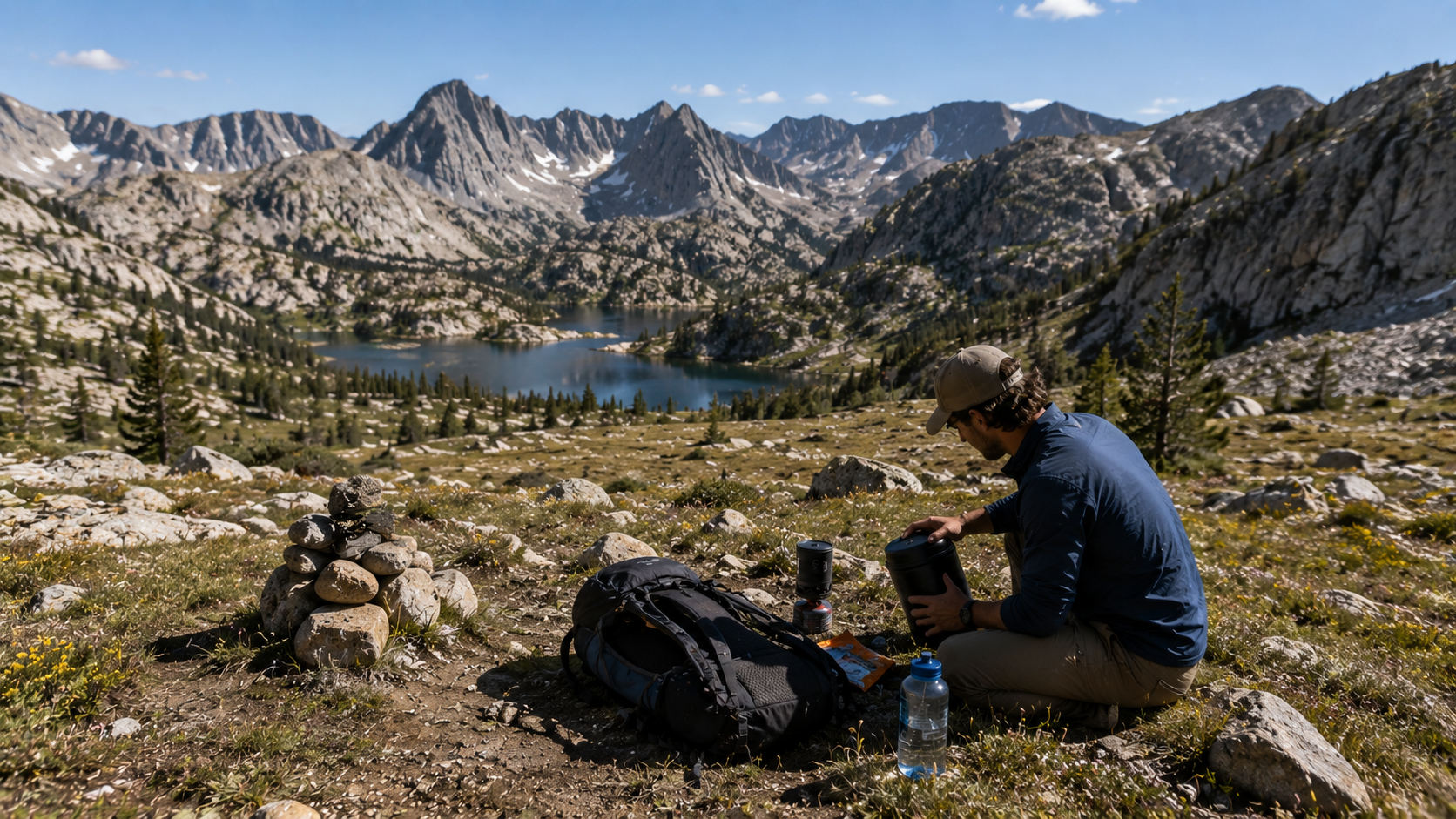
Planning a 4-Day Backpacking Trip in the Wind River Range: Permits, Water, Bear Canisters
The permit situation is simple: there isn't one
The Wind River Range sees a fraction of the traffic that comparable terrain in Colorado or California draws, and the Forest Service hasn't built a permit system around it. You'll sign a trailhead registrar with your name and planned dates — that's for trail-use monitoring, not approval — and that's the entire administrative step standing between you and the trailhead. No lottery, no quota, no advance booking window to plan around.
What isn't optional: food storage
Both the Bridger and Shoshone National Forests, which together cover the range, operate under a food storage order that applies across the entire Wind River Range, not just specific zones. Under that order, food has to be either in an approved bear canister or hung at least 10 feet off the ground. A canister isn't technically mandated by the letter of the regulation, since a proper hang satisfies it too — but in practice, treat a canister as a must-have rather than an option. Both black bears and a growing grizzly population are active in the Winds, concentrated more heavily north of the Bridger Wilderness but not confined there, and a canister removes the nightly job of finding a suitable hang tree in terrain that doesn't always offer one.
A 4-day route that actually fits the season: Big Sandy to Cirque of the Towers
Big Sandy Trailhead, on the range's southwest side, is the standard access point for one of the Winds' signature destinations: Cirque of the Towers, a horseshoe of granite spires ringing Lonesome Lake that draws climbers and backpackers alike.
Day 1 — Big Sandy Trailhead to Big Sandy Lake. A moderate approach through forest and meadow, gaining elevation gradually enough to make it a reasonable first day with a full pack. Camp at Big Sandy Lake, which sits below the range's granite wall and gives you a full second day to tackle the pass ahead.
Day 2 — Big Sandy Lake over Jackass Pass to Lonesome Lake, inside Cirque of the Towers. This is the trip's crux day: Jackass Pass is a steep, rocky climb, and the payoff on the far side is one of the most photographed alpine basins in the range. Camp at or near Lonesome Lake, inside the cirque itself.
Day 3 — Layover day inside the cirque. This is the day to actually be there rather than moving through it — day hikes to the base of individual towers, fishing Lonesome Lake, or simply sitting with terrain most visitors only see in photos.
Day 4 — Retrace the route back over Jackass Pass to Big Sandy Lake and out to the trailhead, or split the exit over a final partial day if the group is tired from the layover day's exploring.
Water
The route crosses reliable water at Big Sandy Lake, Lonesome Lake, and multiple streams along the way, so carrying more than a liter or two at a time generally isn't necessary — treat as you go. Standard backcountry treatment (filter, chemical, or boil) applies; nothing about the Winds' water sources requires special handling beyond that.
What to actually plan around
Afternoon thunderstorms build fast in the Winds during summer, and Jackass Pass is fully exposed with no bailout shelter partway up — plan to be over it before early afternoon, which usually means an early start on day 2. Mosquitoes peak in July before tapering into August, so a late-July trip means DEET and a head net aren't optional extras. And because there's no permit system capping numbers, popular sites like Lonesome Lake can still feel crowded in peak season even without a quota — arriving early to your day-2 camp secures a better site than showing up late hoping for space.
FAQ
Do I need a permit to backpack in the Wind River Range? No formal permit is required. You'll sign a trailhead registrar with your name and dates, which is used for trail-use monitoring only.
Is a bear canister required in the Wind River Range? A food storage order covers the entire range, requiring food to be in an approved bear canister or hung at least 10 feet off the ground. A canister isn't the only technically compliant option, but it's the more reliable one given inconsistent hang-tree availability.
How hard is the hike to Cirque of the Towers via Big Sandy? The approach to Big Sandy Lake is moderate, but Jackass Pass on day two is a steep, exposed climb that's the trip's genuine crux. Plan an early start to be over the pass before afternoon storms build.
Planning this trip? See the Wind River Range listing for a destination overview and related bear canister rules.