140 miles, and almost none of it maintained
The Mojave Road runs roughly 140 miles from a point near the Colorado River, about 10 miles south of Bullhead City close to Needles, California, west to Camp Cady near Barstow. Add the common side trips — the lava tube, the Kelso Depot train station — and a full crossing runs closer to 148 miles. It follows a route used for centuries before it was a vehicle track: Native American trade paths, then a military wagon road connecting a chain of forts across the desert. Most of that history is still visible along the way in the form of historic sites the route deliberately passes.
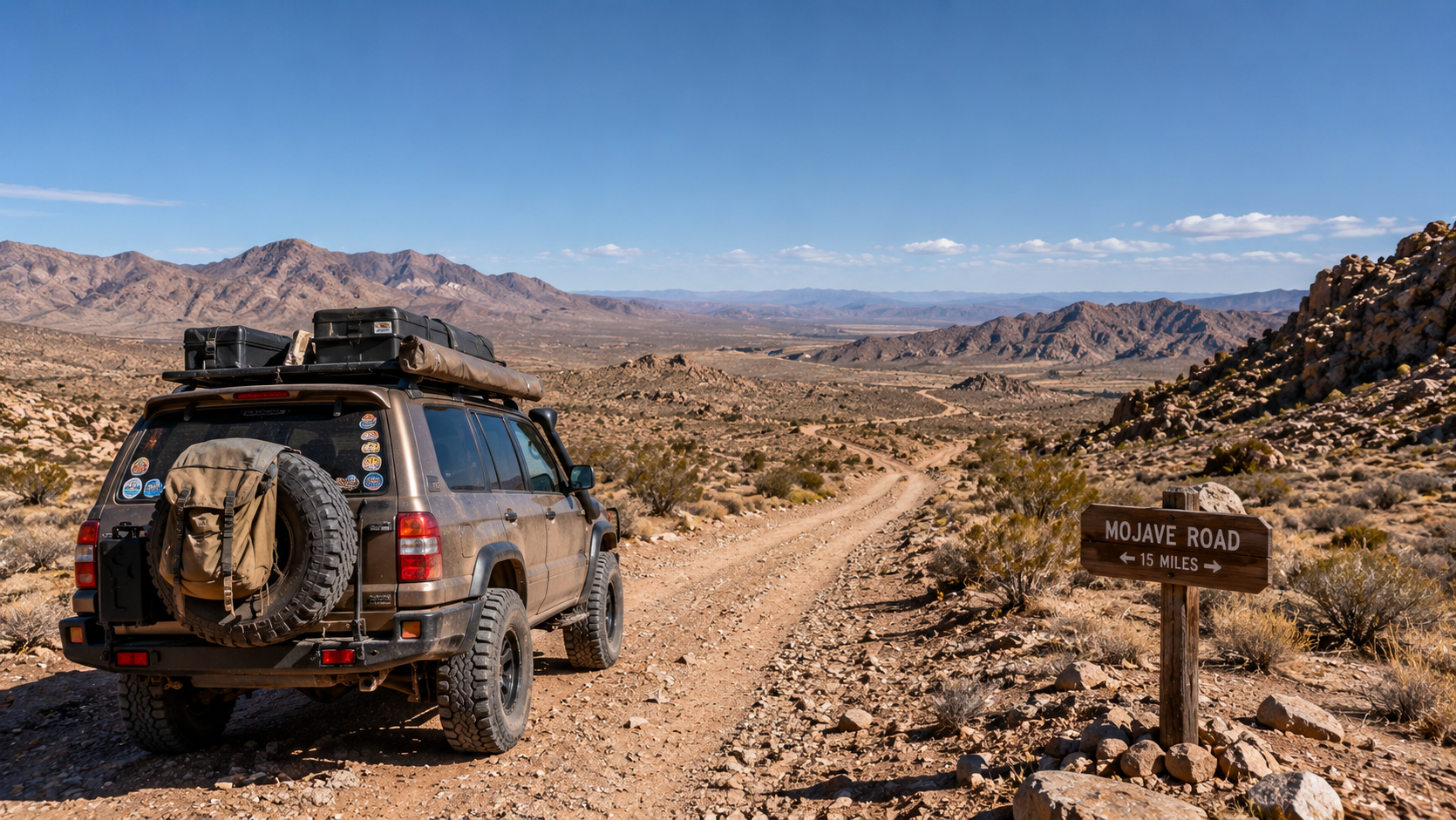
The Preserve maintains the road as passable by two-wheel-drive in dry conditions technically, but that's a technicality worth ignoring. High clearance is advisable throughout, and four-wheel drive is required for all but a few short stretches — this is unmaintained desert track, not a graded road, and sand, rock, and washboard sections show up regularly enough that a standard passenger vehicle has no business out here.
Permits: mostly not required, with two specific exceptions
Driving the Mojave Road itself requires no permit. Two things do: a California campfire permit for any open fire, which is a simple, free permit worth getting before you leave civilization rather than trying to source it en route, and a $50 group permit if your party is larger than seven vehicles or fifteen people. Most first-time crossings run well under that threshold and won't need it.
What to actually bring
This is remote desert running for multiple days with no reliable cell service and no services along the route itself. Carry more water than feels necessary — for both drinking and radiator needs, since overheating on a slow, rough route in desert heat is a real risk. Recovery gear (traction boards, a shovel, a way to air down and back up tires) isn't optional equipment here; it's the difference between a stuck vehicle being an inconvenience or a serious problem. A physical route reference matters more on this trail than most: the standard guide is Dennis Casebier's Mojave Road Guide, which corresponds to numbered mileposts (metal fence posts marked along the route) that are the primary navigation aid, since GPS alone doesn't reliably capture the route's historic waypoints and side-trip turnoffs.
Timing it right
This is not a summer route. Mojave Desert heat in June through August turns a mechanical problem into a survival situation fast, and most experienced overlanders run this crossing in the cooler months, roughly October through April, when daytime temperatures are manageable and overnight camps along the route are actually comfortable rather than something to endure.
What a first crossing actually looks like
Most first-timers budget two to three days for the full 140-mile route, camping along the way rather than pushing it in a single long day — partly because the terrain doesn't reward rushing, and partly because the point of the Mojave Road is the historic sites and desert scenery strung along it, not just reaching the far end. Plan fuel carefully: there's no gas along the route itself, so your range needs to cover the full crossing plus any side trips with a real margin, not a tight calculation.
FAQ
Do I need a permit to drive the Mojave Road? No permit is required to drive the route itself. A California campfire permit is required for open fires, and groups larger than seven vehicles or fifteen people need a $50 group permit.
Do I need four-wheel drive for the Mojave Road? Yes, for all but a few short stretches. The Preserve maintains it as technically passable by 2WD in dry conditions, but high clearance and 4WD are strongly advisable given the sand, rock, and washboard sections along the route.
How long does the Mojave Road take to drive? The full route is roughly 140 miles, 148 with common side trips. Most first-time crossings take two to three days, camping along the way rather than driving it in one push.
Planning this crossing? See the Mojave National Preserve listing for a destination overview.