
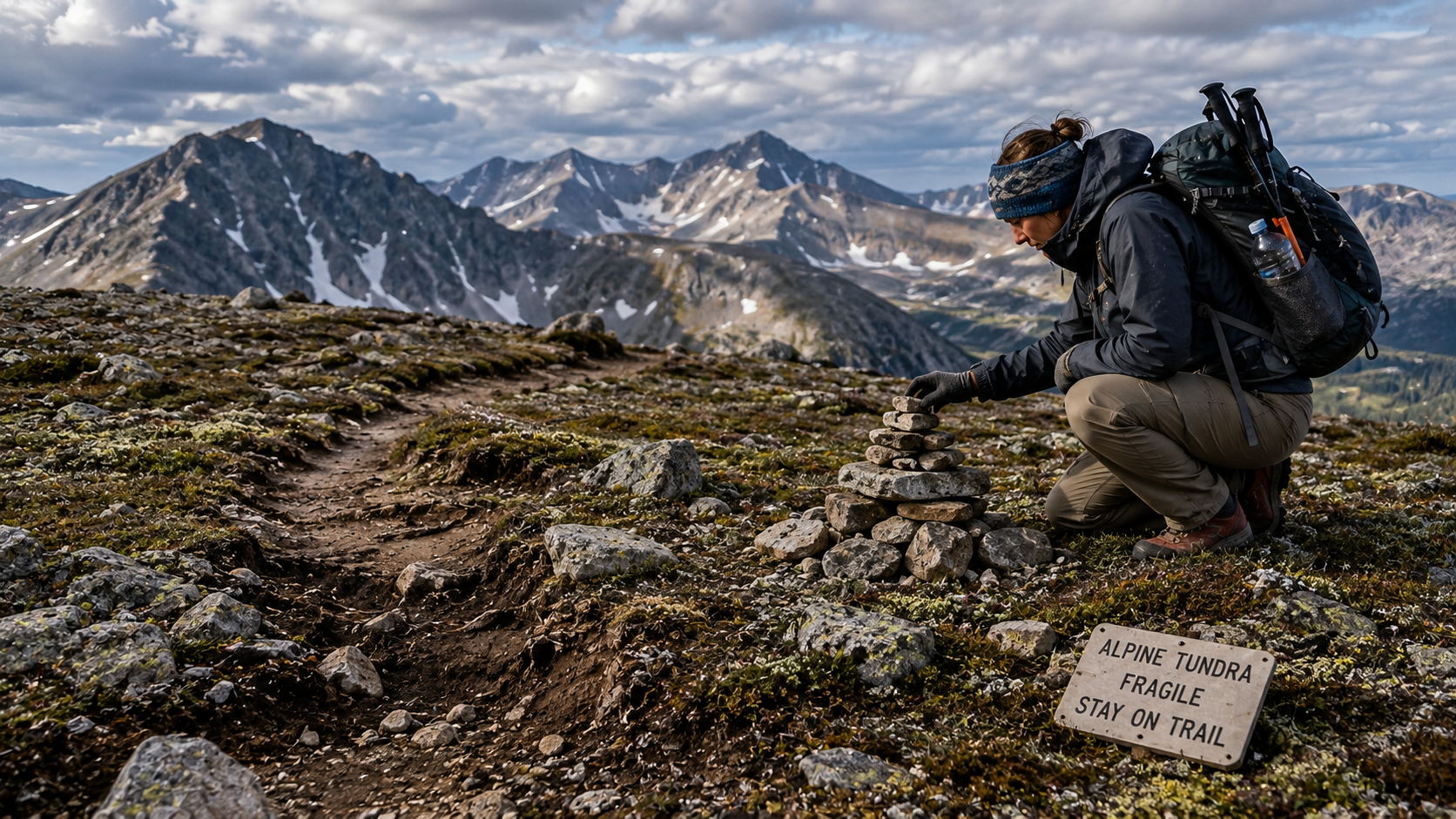
Leave No Trace Above Treeline: Why Cairns and Off-Trail Shortcuts Damage Alpine Tundra
The math on trampling damage is worse than it looks
A long-running study at Rocky Mountain National Park tracked alpine tundra recovery after human trampling across more than four decades. The findings aren't subtle: a single summer of foot traffic can destroy 75 to 90 percent of the cushion plants in a fell-field community. Left alone and protected afterward, that area might show real recovery in 20 years. Left unprotected and still lightly used, some sites don't meaningfully recover within a human lifetime — the same research found severely degraded tundra can take more than a century to come back, if it comes back at all.
Five footsteps on the right plant can set its development back five to ten years. That's not a rounding error. It's the actual scale of what's at stake every time a hiker steps off a maintained trail above treeline.
Why alpine plants take this so much harder than lowland ones
Alpine tundra grows under conditions that are already close to the edge of what a plant can survive — short growing seasons, thin soil, constant wind, and temperature swings most vegetation never has to deal with. Growth is slow because there isn't much window to do it in. A meadow plant at lower elevation can often recover from a bruised stem or a broken shoot within the same season. An alpine cushion plant doing the same repair work might need a decade of short summers to get there, because it's only adding new growth for a handful of weeks a year to begin with.
That's the part that doesn't show up when you're standing on a ridge deciding whether the ten feet of tundra between you and a better photo angle looks fine to walk on. It looks fine because the damage isn't visible yet. The plant just lost years of growth it can't get back quickly.
The rule is simple: rock walk
Above treeline, stay on the maintained trail or on durable surfaces — bare rock, gravel, snow. If the trail braids into multiple faint paths, as many alpine trails do once foot traffic finds the driest or firmest line, stick to the most established one rather than picking a fresh route through vegetation. Where there's no trail at all, choose rock over soil or plant cover every time, even if it means a slightly less direct line. This principle has a name in Leave No Trace circles for a reason — "the rock walk" — because it's the one habit that actually protects tundra at scale, more than any amount of individual care on a single hike.
Skip the cairn-building
Unauthorized cairns cause a second-order version of the same problem: they create the appearance of a trail where none exists, which pulls the next hiker off the established route and onto virgin tundra, multiplying the trampling footprint one new "path" at a time. If a route is genuinely unclear, that's a navigation problem to solve with a map or GPS track, not a rock pile that outlives your hike and reroutes everyone who follows you. Official cairns placed by land managers serve a real navigational purpose on exposed terrain; a cairn you stack yourself on a whim doesn't carry that same reliability, and it adds disturbance without adding safety.
What this actually looks like on a hike
Above treeline, walk single file on the established trail rather than spreading out, even when the group is small and the terrain looks open enough to walk side by side. If you stop for a break, choose a rock outcrop or the trail itself over a patch of tundra to sit on, tempting as the soft ground looks. And if a trail is braided or eroding, staying on the most worn line — rather than avoiding it for a "fresher" one — actually concentrates impact instead of spreading it, which is the better outcome for the tundra as a whole.
FAQ
How long does it take alpine tundra to recover from trampling? Research from Rocky Mountain National Park found that a single summer of trampling can destroy 75–90% of cushion plants in an affected area. With protection, meaningful recovery can take about 20 years; without it, severely degraded sites may take over a century, or may not fully recover at all.
Why is alpine tundra more fragile than lower-elevation vegetation? Short growing seasons, thin soil, and harsh conditions mean alpine plants add very little new growth each year. Damage that a lowland plant could repair in one season can take an alpine plant a decade or more to grow back from.
Should I build a cairn if a trail seems unclear? No. Unofficial cairns can mislead other hikers off the established route and onto undisturbed tundra, spreading trampling damage rather than preventing it. Use a map or GPS track instead.
Hiking above treeline soon? See the Rocky Mountain National Park listing for the park overview and related GAO trail guides where this research applies directly.