
Backcountry Water Purification: Filter vs. Chemical vs. Boil, and When Each One Fails
None of the three methods covers everything
That's the part that gets glossed over in gear marketing regarding water purification. Filters, chemical treatment, and boiling each handle a different combination of bacteria, parasites, and viruses, and picking the wrong one for your specific water source is how people get sick despite doing something to treat their water.
Boiling: the most complete method of water purification, with an altitude catch
A rolling boil for one minute is enough to kill bacteria, parasites, and viruses at elevations under 6,562 feet. Above that elevation, extend it to three minutes — thinner air changes boiling dynamics enough that the standard time isn't sufficient. Against Cryptosporidium specifically, one of the more treatment-resistant parasites you'll encounter in backcountry water, boiling is rated as highly effective, which isn't true of every method on this list.
The tradeoff is fuel and time. Boiling enough water for a group, or for a multi-day trip, means carrying enough fuel to do it repeatedly, and it doesn't cool fast enough to drink immediately. It's the most reliable single method and the least convenient one.
Filters: excellent against parasites, blind to viruses
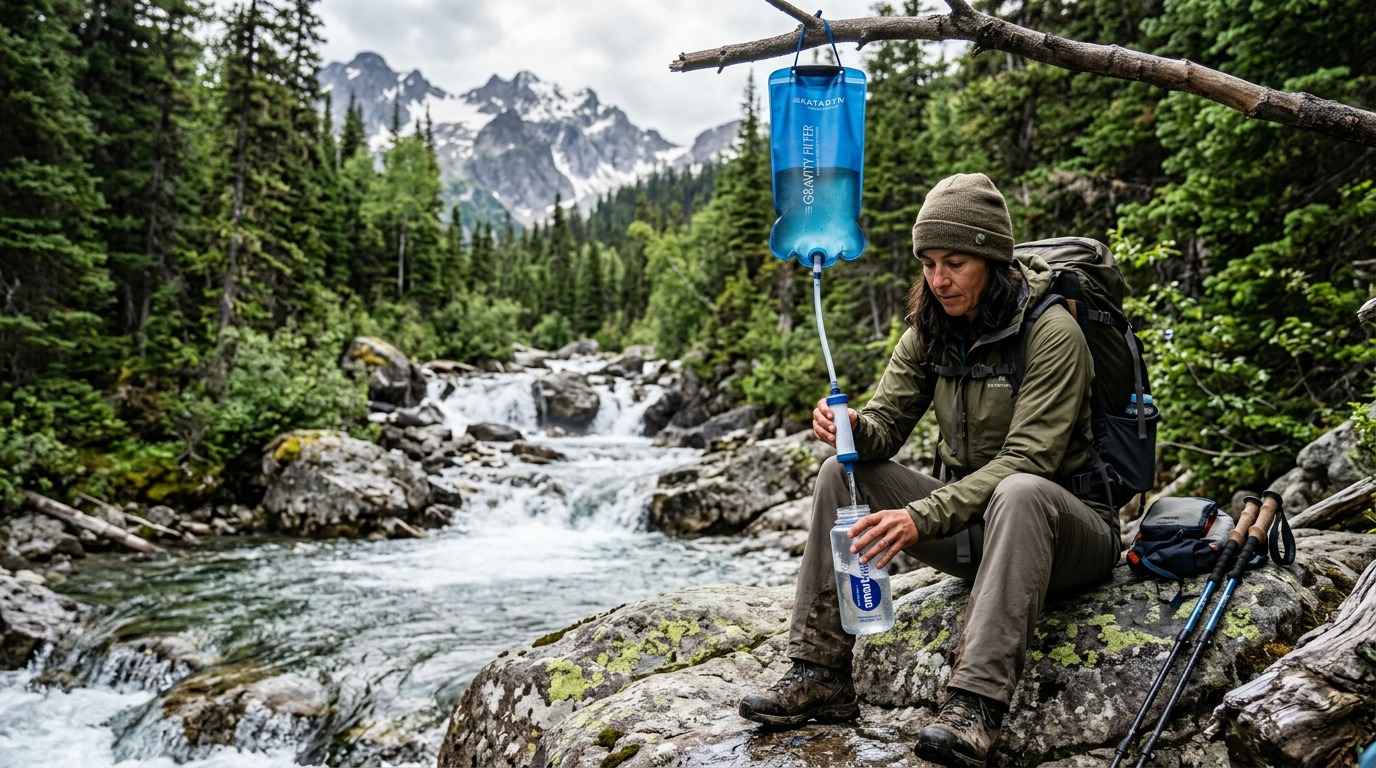
A filter with an absolute pore size of 0.3 microns or smaller removes bacteria and parasites, including Cryptosporidium and Giardia, at a high rate — provided it's rated for cyst reduction under NSF Standard 53 or 58. What a standard backcountry filter does not do is remove viruses. Viral particles are simply too small to be caught by the pore sizes used in most portable filters.
In most of North America's backcountry, this isn't a major practical gap — waterborne viral contamination in remote wilderness sources is comparatively rare compared to bacterial and parasitic risk. It becomes a real consideration in areas with more human or agricultural contamination upstream, or international travel, where a filter alone may not be the right call.
Chemical treatment water purification: strong against some things, weak against others
Iodine and chlorine bleach both kill bacteria and viruses effectively but perform poorly against parasites — they don't reliably kill Cryptosporidium at standard contact times. Chlorine dioxide tablets do better here: they're effective against Giardia and somewhat effective against Cryptosporidium, which makes them the stronger chemical option if parasite risk is a real concern at your water source.
Contact time matters more than people expect. Two iodine tablets typically need about thirty minutes to disinfect a liter, and rushing that window undercuts the whole treatment. Iodine also isn't recommended for pregnant women, people with thyroid conditions, anyone with a known iodine sensitivity, or for continuous use over more than a few weeks — it's a solid short-trip tool, not a long-term water plan.
Matching the method to the actual risk
If the water source is a clear, fast-moving alpine stream far from grazing land or trails with heavy pack-animal or livestock use, parasite risk is the dominant concern, and a good filter handles that well on its own. If you're treating water in an area with more human traffic, livestock, or agricultural runoff upstream, a filter plus a chemical backup, or boiling, covers the gap a filter alone leaves against viruses. When in doubt, or when fuel and time allow, boiling remains the one method that doesn't require picking which pathogen to prioritize.
FAQ
How long do I need to boil water at high altitude? One minute at elevations below 6,562 feet (2,000 meters), extended to three minutes above that elevation.
Do backcountry water filters remove viruses? No. Standard filters with 0.3-micron or smaller pores remove bacteria and parasites effectively but are not rated to remove viruses, which are too small to be caught by typical filter pore sizes.
Are iodine tablets effective against Cryptosporidium? Not reliably. Iodine and chlorine bleach kill bacteria and viruses well but perform poorly against Cryptosporidium. Chlorine dioxide tablets are a stronger chemical option against that specific parasite.